Products - Dendrobium Huoshanense
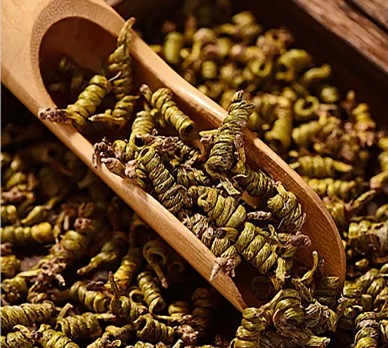
Dendrobium Huoshanense
Dendrobium Huoshanense (Dendrobium huoshanense C. Z. Tang et S. J. Cheng), commonly known as rice dendrobium, Huoshan rice dendrobium, or Huo Shan Shi Hu, is a perennial herbaceous plant belonging to the Dendrobium genus of the Orchidaceae family. It is mainly produced in Huoshan County, Anhui Province, in the Dabie Mountains.
According to historical records, the history of Dendrobium Huoshanense can be traced back over 2,000 years. Its efficacy was first documented in the "Shennong Bencao Jing" (神农本草经), the earliest extant Chinese pharmacopoeia compiled during the Han Dynasty. The text states: "Dendrobium, sweet in taste and neutral in nature. It treats internal injuries, alleviates rheumatism, regulates qi, replenishes deficiencies in the five viscera, strengthens the kidneys, and promotes vitality. Long-term use thickens the intestines and stomach, lightens the body, and extends life."
Completed in the 3rd century, the "Compendium of Famous Physicians' Prescriptions" (名医别录) is a significant work in the field of herbal medicine literature following the "Shennong Bencao Jing" (神农本草经). It compiles additional materials added by renowned physicians from the Han Dynasty to the Wei and Jin periods to the "Shennong Bencao Jing", serving as a summary of clinical pharmaceutical experience from that era. The text explicitly states: "Dendrobium, non-toxic. It is beneficial for replenishing essence, nourishing internal deficiencies, harmonising stomach qi, promoting muscle growth, expelling pathogenic heat and toxins from the skin, and alleviating pain, coldness, and weakness in the legs and knees. Prolonged use calms the mind and alleviates anxiety. It is also known as Jinsheng, Dulan, and Shixu. It grows in the valleys of Liu'an Mountain, on rocks by the water..."
Completed in 659 AD, the "Newly Revised Materia Medica" (新修本草), commonly known as the "Tang Materia Medica" (唐本草), is considered the world's earliest pharmacopoeia. It not only spread widely but also remained in circulation for over 300 years. The text states: "Dendrobium, sweet in taste, neutral in nature, and non-toxic. It treats internal injuries, alleviates rheumatism, descends qi, replenishes deficiencies in the five viscera, strengthens the kidneys, and enhances vitality. It nourishes essence, replenishes internal deficiencies, harmonises stomach qi, promotes muscle growth, expels pathogenic heat and dampness from the skin, and alleviates pain, coldness, and weakness in the legs and knees. Prolonged use strengthens the intestines and stomach, lightens the body, and extends longevity. It calms the mind and alleviates anxiety. It is also known as Linlan, Jinsheng, Dulan, and Shixu. It grows on rocks by streams in the valleys of Liu'an Mountain..."
"The Thousand Gold Winged Prescriptions" (千金翼方), written by Sun Simiao, the Medicine King of the Tang Dynasty, was completed around the second year of Yongchun (682 AD). It is a compilation of the author's nearly thirty years of experience in his later years, intended to supplement the deficiencies of his earlier masterpiece, "The Thousand Gold Essential Prescriptions". In Volume 2 of this book, the main medicinal herbs are first listed with their effects and primary places of origin, and it is clearly recorded: "Dendrobium, sweet and neutral in taste, non-toxic. It treats internal injuries, removes numbness, and descends qi. It replenishes deficiencies in the five viscera, strengthens the kidneys, enhances essence, and compensates for internal deficiencies. It harmonises the stomach qi, promotes muscle growth, expels pathogenic heat and toxins from the skin, and alleviates pain, coldness, and weakness in the legs and knees. Prolonged use thickens the intestines and stomach, lightens the body, and extends longevity. It calms the mind and alleviates anxiety. Also known as Linlan, Jinsheng, Dulan, and Shixi. It grows on rocks by streams in the valleys of the Liu'an Mountains..."
"The Supplement to the Compendium of Materia Medica" (本草纲目拾遗) was compiled by the renowned Qing dynasty physician Zhao Xuemin in the 30th year of the Qianlong reign (1765). This work was compiled over 150 years after the publication of the "Compendium of Materia Medica" (本草纲目), with the aim of supplementing its omissions. Regarding dendrobium, the most significant aspect of this book is its clear and detailed explanation of Huo Dendrobium. The text states: ‘Huo Dendrobium originates from Huo Mountain in Jiangnan. It is smaller in size than the common Dendrobium, yellow in colour, and curved rather than straight. Some form into balls. The local people use it as a substitute for tea, claiming it is highly effective in relieving heat, invigorating the spleen, quenching thirst, promoting urination, and enhancing vitality. Some boil it into a paste to serve to guests, though this practice was not previously widespread. In recent years, it has become popular throughout Jiangnan and Jiangbei. …"
Chen Cunren, a renowned physician in Shanghai during the 1930s and 1940s, included ‘Huo Shi Hu’ in his three-million-word encyclopaedia, "The Great Dictionary of Chinese Pharmacology" (中国药学大辞典), stating: "Huo Shi Hu, also known as Huo Shan Shi Hu in prescriptions. Sweet and neutral in nature, salty in taste, non-toxic. It clears the stomach and removes excessive heat within the body. It generates body fluids and alleviates fatigue. It calms the mind and treats wind disorders. It can suppress phlegm, relieve summer heat, and has a sweet and fragrant aroma that descends qi."
In his 1920 work, "Orthodox Interpretation of Materia Medica" (Bencao Zhengyi), Zhang Shanlei of the Republic of China period emphasised: "For elderly people and those who are weak, with insufficient gastric juices, and who should not consume overly cold foods, Huo Shan Shi Hu is ideal."
In 1933, the entry for Huo Shan Shi Hu in the book "Dictionary of Medicinal Properties" (药性字典) published in Shanghai states: "The dendrobium produced in Huo Shan, Anhui Province, has a slender, curled shape and is also known as Feng Dou, the finest variety. ... It has a sweet and salty taste, a slightly cold nature, and is non-toxic. Huo Shan Shi Hu is a key herb for nourishing yin and generating body fluids, primarily used to restore yin depleted by fever and replenish body fluids that have been exhausted."
In May 2020, Dendrobium Huoshanense was officially included in the 2020 edition of the Chinese Pharmacopoeia (中国药典), thereby obtaining a legally recognised national pharmaceutical standard. Its properties and effects are clearly stated as follows: "Sweet, slightly cold. It enters the Stomach and Kidney meridians. It nourishes the stomach and generates body fluids, tonifies yin and clears heat. It is used for conditions such as yin deficiency due to heat diseases, dry mouth and thirst, insufficient stomach yin, poor appetite and vomiting, persistent low-grade fever after illness, yin deficiency with excessive fire, bone steaming and consumptive fever, dim vision, and weak and soft tendons and bones."
As scientific research continues to advance, the wide-ranging benefits of Dendrobium Huoshanense are gradually being revealed to the world. Modern research has shown that Huoshan stone orchid has proven benefits such as antioxidant properties, anti-ageing effects, blood sugar reduction, blood lipid reduction, liver protection, anti-cancer properties (stomach cancer, throat cancer, lung cancer), and enhance immune system function.
Source - https://www.ahhuoshan.gov.cn/ztzl/ztzl/hsshzhgb/33900539.html
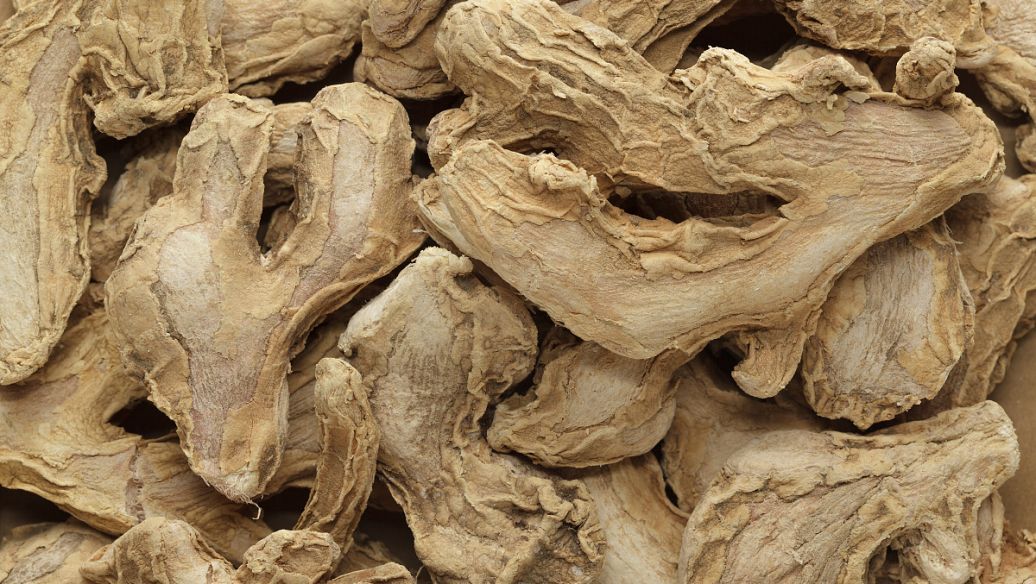
Polygonatum
Polygonatum, also known as Chinese Solomon's seal, sun grass, or chicken head ginseng, is the dried rhizome of the plants Polygonatum kingianum, Polygonatum odoratum, or Polygonatum multiflorum, all belonging to the Liliaceae family. Depending on their shape, they are commonly referred to as ‘large Polygonatum,’ ‘chicken head Polygonatum,’ or ‘ginger-shaped Polygonatum.’ Polygonatum was originally primarily used as a health food by Daoists, and as such, it is more commonly found in herbal medicine texts focused on dietary therapy rather than medicinal herbs.
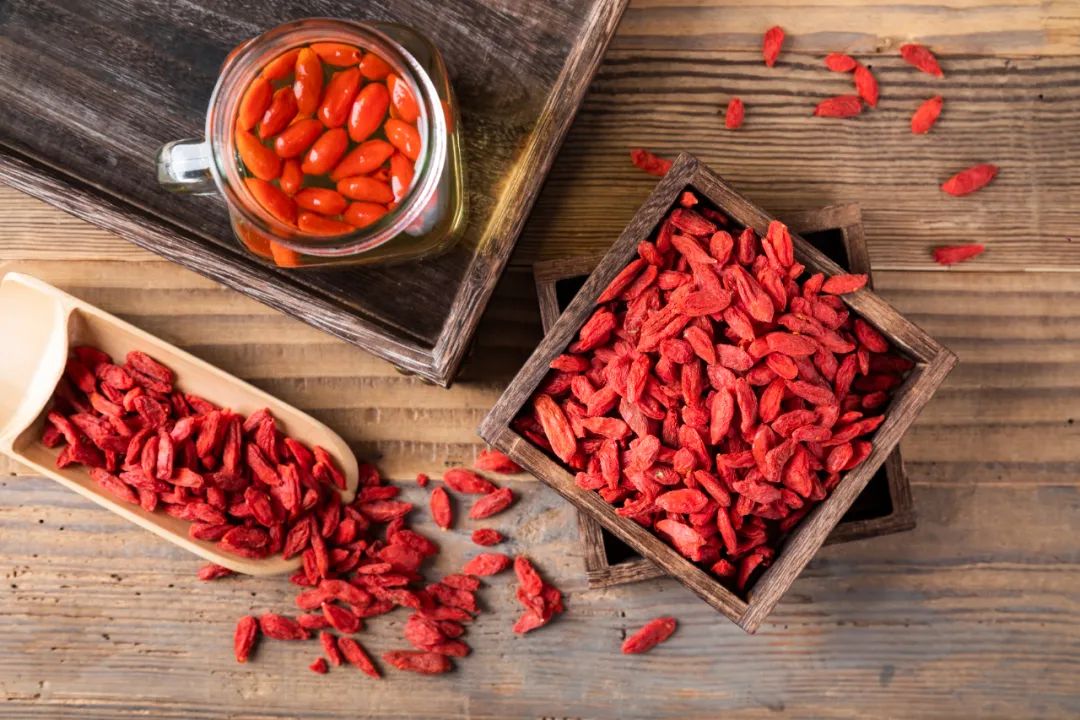
Zhongning Goji Berry
The Chinese people's obsession with ‘health preservation’ is probably unmatched by any other nation in the world. After all, the catchphrase ‘soak goji berries in a thermos’ has long been a reflection of the daily lives of many Chinese people. Those who are more particular about their health will even throw a few goji berries into their water cups all year round.